
If you have noticed holes in trees on your property and want a clear, practical explanation, this post covers what Humboldt County landowners most need to know. ForestScapes LLC is the local leader in professional tree services in Trinidad, California, and we’ll help you identify the underlying cause of the symptoms you see to determine what action makes sense.
In general, the causes of holes in trees fall into three categories: wildlife activity, insect damage, and internal decay, and these often overlap. For example, woodpeckers often drill holes because insects that are also causing damage already live inside the tree.
Woodpecker Damage to Trees
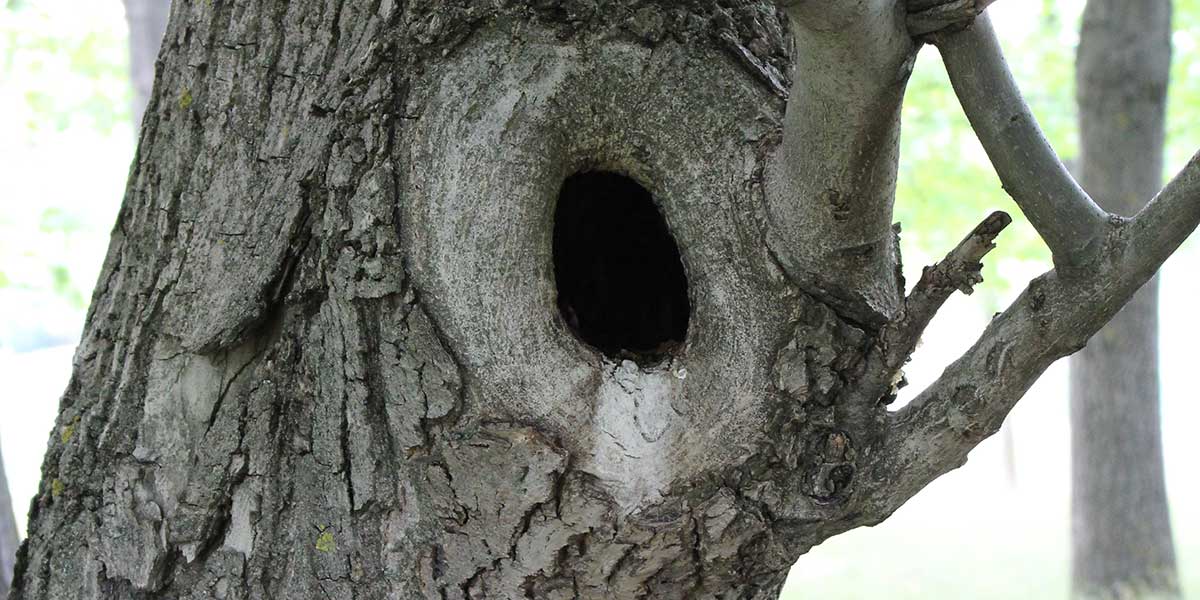
Woodpeckers often cause the most visible and misunderstood trunk holes. They drill into wood constantly searching for insect larvae and feeding on sap through rows of small holes. They also excavate cavities for nesting.
Sapsucker holes appear in neat rows, while pileated woodpeckers leave large rectangular gouges. When woodpeckers target the same trunk section, the tree usually already harbors insects or decay.
Federal law protects woodpeckers, and most property owners prefer to deter them by treating the underlying insect issue.
Insect Damage to Tree Trunks
Wood-boring bark beetles and carpenter ants all create holes ranging from pinhole size to several millimeters wide.
In the Trinidad area, native bark beetles target stressed Douglas fir and Sitka spruce after drought. Carpenter ants nest in wood that moisture or fungi have already softened. Fine frass around holes or at the base signals active borers.
Insects attack trees that have already been weakened by drought or storm injuries, making general tree health care the first line of defense.
Signs of Tree Trunk Decay and Cavity Formation
When bark is damaged, exposed inner wood allows fungi and bacteria to enter, and the heartwood gradually decays. This process leads to heart rot, the most common cause of cavities in trees.
Storm breakage and lightning strike injuries often create the initial wound that lets decay in, which can also relate to the causes of vertical trunk splits in trees. Soft, crumbly wood and a hollow sound when tapping the bark are typical indications of internal decay. Coast redwoods regularly develop large cavities yet remain structurally sound because thick outer layers carry the load.
When Holes Signal a Significant Problem
Not every hole requires intervention, but certain signs warrant a professional evaluation:
- A cavity deeper than one-third of the trunk diameter increases the risk of failure in high winds.
- Woodpeckers targeting the same area suggest active insect infestations or decay inside.
- Mushrooms at the base, combined with cracks or a lean, indicate a potential structural hazard.
Trinidad coastal winter storms stress compromised trees, and a professional evaluation becomes worthwhile whenever multiple warning signs appear together.
Get an Expert Tree Assessment From ForestScapes LLC
Now that you know more about what causes holes in trees, you can make an informed decision about caring for the ones on your property. ForestScapes LLC serves Trinidad and the surrounding communities of Humboldt County with certified arborist consulting, tree risk assessments, and comprehensive tree care.
Contact us online or call (707) 382-8702 today to schedule your free on-site assessment.