
In this blog post, you’ll learn the answer to the question, “What causes a tree trunk to split vertically?” If you suspect your split tree won’t last much longer, don’t wait for it to fall and injure somebody or damage your property; contact Forestscapes to schedule professional tree services in McKinleyville, CA.
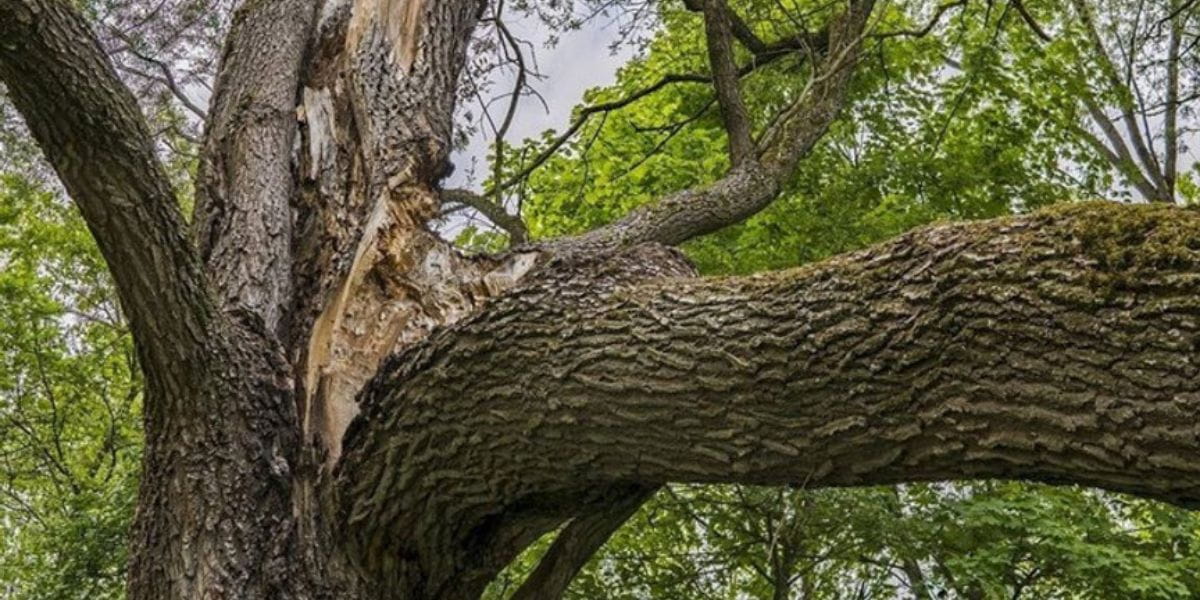
Why Tree Trunks Split and Develop Deep Cracks
Vertical splitting occurs when internal stress forces exceed the tensile strength of the wood fiber. Trees manage mechanical load through a network of vascular tissue that distributes pressure across the trunk. When damage, decay, or structural defects interrupt that system, stress concentrates in a single plane, and the wood separates along the grain.
The signs and causes of trunk splitting in trees often trace back to conditions that compromise vascular function, weaken structural integrity, or create rapid fluctuations in internal moisture content.
Four Reasons for Vertical Cracks in Tree Trunks
The following sections describe what causes a tree’s trunk to split vertically.
Frost Cracks
Rapid temperature drops cause the outer layer of the trunk to contract faster than the wood underneath. The tension between the two layers pulls the outer wood apart and produces a clean vertical split, often with an audible crack. Frost cracks frequently reopen in subsequent winters and deepen each time.
Internal Decay
Fungal decay breaks down the structural fibers inside the trunk. As the interior weakens, the outer shell carries more of the mechanical load than it’s built to handle. Eventually, the outer wood splits under the pressure.
A tree can show almost no external symptoms while decay hollows out the core, which makes vertical splitting one of the first visible signs that something serious is wrong inside.
Lightning Strikes
Lightning travels through a tree’s vascular system and converts moisture inside the trunk into steam almost instantly. The pressure from that rapid expansion blows the wood apart from the inside. The resulting split runs vertically along the path the current traveled and often extends the full length of the trunk.
Sun Scald
Sun scald develops when intense winter sunlight warms one side of the trunk during the day, then temperatures drop quickly after sunset. The warmed bark becomes active while shaded tissue remains dormant. That rapid shift damages living cells beneath the bark and creates dead sections that dry, shrink, and separate from the wood.
As the injury expands, the weakened area can crack vertically and expose the trunk to insects, fungal infection, and additional decay.
How To Prevent Vertical Splitting in Tree Bark
Vertical splitting happens to trees that are already facing health and structural issues. Staying vigilant about maintaining your tree’s health gives you the best chance at avoiding the situations described above.
To prevent future vertical splitting, be sure to:
- Schedule routine inspections with a certified arborist to catch structural problems early.
- Water deeply and consistently during dry periods to prevent moisture stress.
- Mulch lightly around the base to regulate soil temperature and retain moisture.
If you need help maintaining your trees to prevent vertical splitting, contact Forestscapes to schedule professional arborist services in McKinleyville, CA.
Call Forestscapes To Schedule an Arborist Evaluation and Tree Removal Services
We’ve now answered the question, “What causes a tree trunk to split vertically?” If you’re still unsure why your tree has a split in it, or if you need to schedule removal services, call Forestscapes at (707) 532-5564 to speak with one of our professional arborists about your options.
Make sure you check out our other post about the causes of holes in trees to learn what creates tree cavities and what they can mean for tree health.